
The alarming paradox of leadership in philanthropy
We're spending too much time wooing donors and not enough time caring for our co-workers.


If you've been in fundraising — or a role that is fundraising-adjacent — for any amount of time, you probably know the etymological foundation of the word philanthropy.
Acts of love and care for fellow humans.
Giving to the needy.
Helping those who can't help themselves!!!!!
(I hope you read those descriptors with increasing levels of sarcasm — and if you're not, please go back and do so. Remember that I can be a very unserious person.)
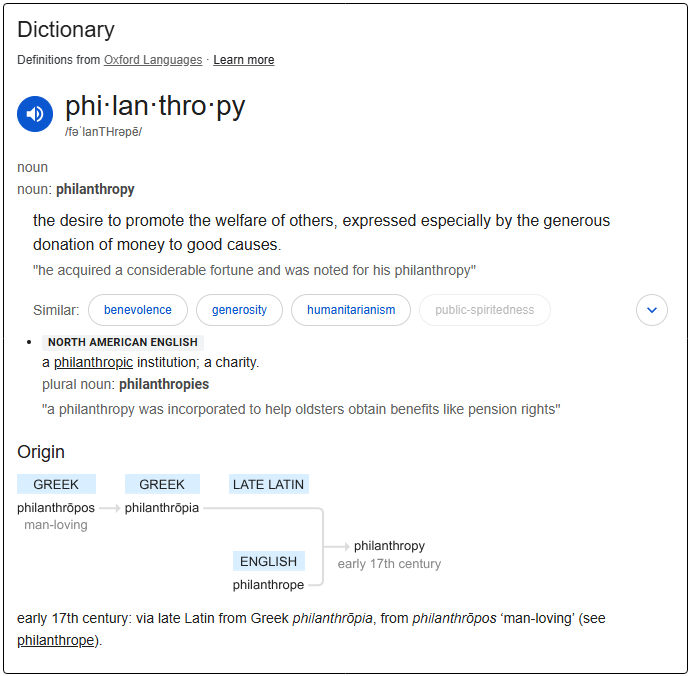
In more recent years, the term has amassed scrutiny given its association primarily with wealthy, powerful, (usually) white people.
And does anyone else fondly remember when Vu Le unleashed chaos upon the world three years ago, and thereby broke Nonprofit LinkedIn™️ when he referred to philanthropy as often becoming "a hobby for the rich" on a webinar?
Fun times, people. FUN times.
This is not about that — but feel free to take a trip down memory lane once you're done reading this post.
No, what alarms me — especially through the lens of Oddball Leadership — is the lack of love, care, and support fundraising leaders possess for the people around them at their 9-to-5.
IT'S THE SYSTEM™️, STUPID!!
I've been around the fundraising block for over 14 years. I've led teams for about seven. That whole time, I've also "been led."
And having been on both sides of the report/supervisor coin, it's become abundantly clear to me why fundraising leaders — the people who bend over backwards for donors supporting their causes, clients, and communities, AND expect their teams to do the same — often forget to love the humans sitting ten feet away from them:
It's because the system trains them not to.
The Donor Halo Effect
Fundraisers are trained to become masters of empathy.
To listen carefully.
To gain perspective.
To withhold judgment.
To see individuals as humans, not transaction machines.
Books, articles, webinars, conferences, and summits abound, lauding the value of empathy in fundraising.
Empathy toward whom, specifically?
Donors.
Staff, on the other hand?
They often are met with pressure to perform. Unrealistic fundraising goals. Burnout. Long hours. Abysmal pay and benefits. Spicy meatballs.
All while trying, at least in the social services sector, to help solve very real, complicated, and difficult problems plaguing their communities.
When the moral spotlight shines on the mission and the quality of donor relationships, it can become easy for staff to become an afterthought.
The people closest to the work become the easiest to overlook.
The Scarcity Mindset Warps Behavior
If you work in the nonprofit sector, you will feel this. You should probably sit down.
Nonprofits are drowning in a constant deluge of scarcity (imagined or not).
There's never "enough" funding.
There's never "enough" time.
There's not "enough" money going to "the mission."
We feel it from the outside, too. We compete with "too many" other organizations to garner funder attention. We have to jockey for donor dollars. We have to keep our overhead percentages low.
These sources of stress and anxiety completely sap someone's ability to lead effectively. And when leaders feel responsible for closing a budget gap or hitting a fundraising goal, the team starts looking less like humans and more like robots.
Push harder.
Move faster.
Close the gap.
The irony is brutal. Organizations devoted to "philanthropy" are built on systems doomed to erode it.
Moral Licensing
As I get older, and spend more time in the fundraising space, I am becoming more attuned to this one. And I don't think it comes from a place of conniving or nefariousness — I am not sure any of these circumstances are — so it's sneaky.
I have a suspicion that most people who work in "doing good" like fundraising, especially as they justify the usefulness of their role and their salary to external stakeholders, trap themselves in a psychological loophole, that they may not even realize:
Because I am doing good in the world, I must be a good person.
And as long as they do good, and look good in front of the right people, they're less likely to examine how they treat the people around them.
Their mission becomes proof of virtue. Their primary goal becomes optics over truth. The need for self-reflection gradually and quietly fades.
Outcomes are Rewarded; Culture is Not.
In traditional fundraising culture, these are the things boards and c-suite executives tend to celebrate:
- Dollars raised.
- Campaigns closed.
- Programs launched.
And while they're busy celebrating these things, they're not usually stopping to ask
- Do people on your team show up as their full and best selves everyday?
- Are they fulfilled in their roles?
- Do they show grace in times of conflict?
- Are they thriving under your leadership?
So naturally, leaders optimize for the metric that gets applause:
Money. (Even if you don't treat donors like ATMs.)
Culture becomes a side hobby.
This is the tragedy:
The best teams, including the best fundraising teams, don't run on anything to do with fundraising goals.
They run on belonging, joy, curiosity, and gratitude.
 Bri Gerzevske
The Common Misstep of Promoting Top Fundraisers
Too many times, I have seen this mistake.
People getting promoted into positions of leadership because they close big gifts, run successful fundraising campaigns, and manage donor relationships well.
But none of those skills teach someone how to care for a team, and they're hardly transferable.
So a talented fundraiser suddenly becomes a manager with no training in psychological safety, conflict resolution, emotional labor, or active presence.
And the result is unintentional neglect that spreads.
THE ODDBALL INSIGHT
It has taken me some years, but I've realized our very poignant reality in fundraising leadership:
Even though philanthropy asks the world to care more deeply about humanity, fundraising leaders often fail the first test of that belief by how they treat the people on their teams.
And in that failure, their leadership is insufficient.
They forget a very important fact, that the mission is not merely achieved by donors.
And it can't happen anyway without the humans in the cubicles around you: planning events, entering gifts, stuffing envelopes, scheduling volunteer opportunities.
So fundraising leaders, love your people.
Cultivate belonging.
Show appreciation.
Be curious.
And use joy to create conditions where people want to bring their full humanity to their work.
Because it's the right thing to do.
Your fellow humans will thank you for it.
And guess what? Only bigger, stronger fundraising magic will follow.
 Bri Gerzevske